Jamie CarIson, EFNEP Educator in Pitt County, recently hosted an adult class with participants in a recidivism support program. The focus of the lesson was on building practical cooking skills through a simple, nutritious recipe inspired from this Cucumber Avocado Salad.
Hands-On Learning with Fresh Ingredients
(Updated: May 12, 2026, 11:36 a.m.)
Cucumber Avocado Salad
Makes 4 servings | Serving Size: 1 cup
Ingredients
- 1 avocado, diced
- 1 English cucumber, peeled and diced
- 4 tablespoons finely chopped dill (or 2 tablespoons dried)
- 12 cherry tomatoes, halved
- 3 tablespoons white wine vinegar
- 1 teaspoon salt
Directions
- Place all ingredients in a resealable plastic bag. Squeeze bag gently to thoroughly mix ingredients.
- Chill at least 1 hour before serving.
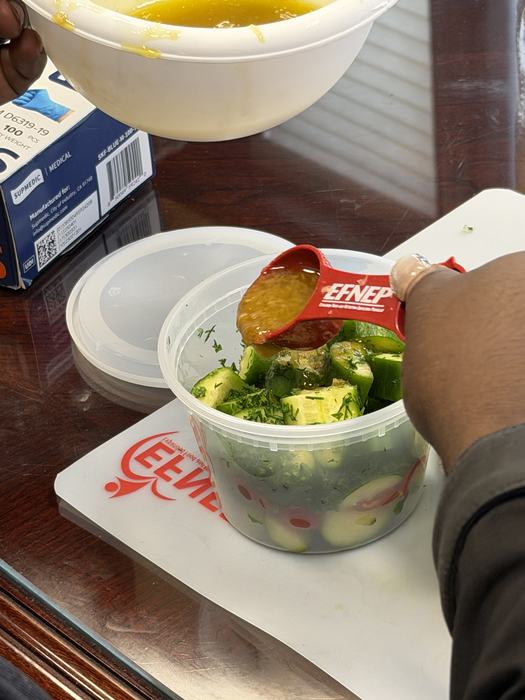
The lesson began with a discussion on how healthy meals can be both affordable and easy to prepare using fresh ingredients. Participants explored how incorporating vegetables like cucumbers, tomatoes, onions, and herbs can add flavor, texture, and nutritional value without requiring complex techniques or salt.
The class then transitioned into a hands-on cooking experience. Each participant prepared their own salad, practicing essential knife skills such as safely cutting cucumbers, tomatoes, and herbs. While not everyone preferred raw onions, all participants took the opportunity to practice cutting them, reinforcing skill development regardless of personal taste preferences.
As the activity progressed, participants became more comfortable and engaged, asking questions, sharing feedback, and supporting one another. The process created an environment where learning felt approachable and relevant, helping to build both confidence and competence in the kitchen.
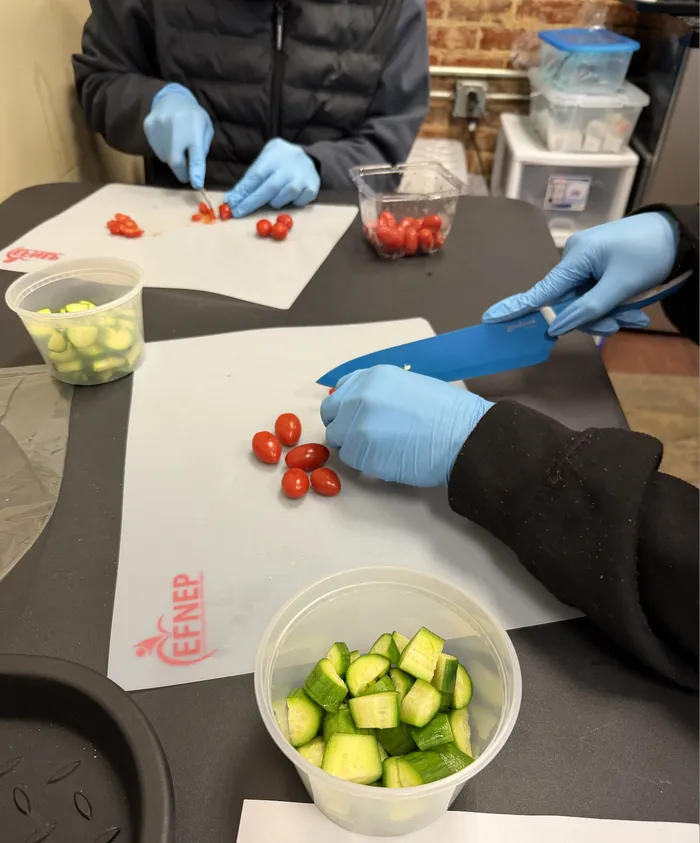
At the conclusion of the class, each participant took home their prepared salad, along with additional ingredients provided through the food pantry. This allowed them to recreate the recipe independently, extending the impact of the lesson beyond the classroom.
This class highlighted how hands-on learning, even with simple recipes, can strengthen essential life skills. Participants left with increased confidence in food preparation, greater familiarity with fresh ingredients, and practical knowledge they can apply to support healthier eating habits.